Net Neutrality on Deck

November 14th, 2008 by tkarr

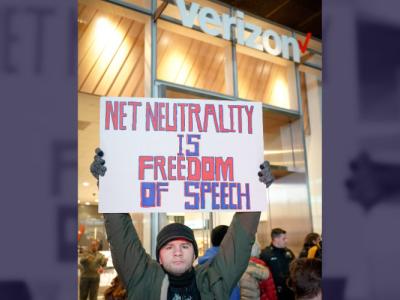
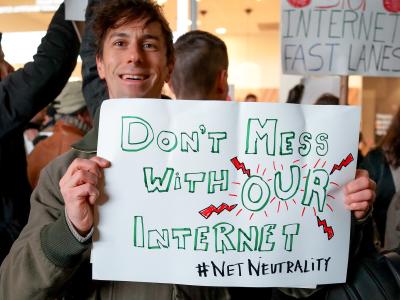
There’s been heavy traffic over the Net Neutrality wires since the November 4 Election of Barack Hussein Obama, and it’s not just because the president-elect was so outspoken in support of the principle while on the campaign trail.

There has been a sea change in Washington since then, as the wonks, tech pundits and lobbyists align themselves with new leadership and the likelihood that Net Neutrality could become law soon.

Holding to His Pledge

Obama in the Front Seat

Within two days of the election Obama’s transition team laid out his science and technology agenda at www.change.gov, prominently highlighting the work that SavetheInternet.com members have prioritized for more than two years now.

According to the agenda, an Obama administration will hold to its campaign promises and “protect the openness of the Internet.”

“A key reason the Internet has been such a success is because it is the most open network in history. It needs to stay that way,” Obama’s agenda states. “Barack Obama strongly supports the principle of network neutrality to preserve the benefits of open competition on the Internet.”

Soon thereafter, former Vice President Al Gore told CurrentTV that he was “all for” Net Neutrality.

Gore ‘All For’ It

“I just think that it’s unacceptable to have the folks that control the pipes to get into anything that smacks of controlling the content, or favoring their content over other content,” Gore said.

Legislation for 2009

And just yesterday, a top staffer for Sen. Byron Dorgan told the media that the senator plans to introduce Net Neutrality legislation in the new Congress.

“We feel that legislation is definitely necessary,” Frannie Wellings, telecom counsel to Dorgan said during a conference in Washington. (Disclosure: Wellings worked at Free Press before joining Dorgan’s staff)

Dorgan is influential as one of the highest-ranking members of the Senate Commerce Committee.

AT&T’s New Tune?

Obama, Gore and Dorgan’s support is no surprise. What’s “mind blowing” according to some in the media, is AT&T’s apparent change of heart.

At the same conference, AT&T’s lead policy VP, James Cicconi, said, “There’s a lot of people who now believe that companies like AT&T are not plotting to overthrow the open Internet concept.”

“It’s against AT&T’s economic interest to block or slow Internet content, because customers demand an open Internet, he added. “Our core asset is our network,” he said. “We get paid for carrying bits.”

This is from the same company whose former CEO called all of us “nuts” for wanting to use his “pipes” without paying a special access fee.

“There has been no larger, stauncher opponent of Net Neutrality,” a surprised Jason Lee Miller writes about AT&T’s recent switch.

“Hasn’t [Cicconi] heard his bosses speak about it?” Miller asks, describing their earlier “desire to discriminate between content providers,” and their willingness to spend tens of millions of dollars on “K” Street firms that “actively lobbied against any such openness.”

That was then. This is now.

Obama Wants Your Media Reform Ideas

November 7th, 2008 by mtady

Day two of President-Elect Barack Obama’s transition to the White House, and already he came out strong for media reform.

Yesterday he laid out his science and technology agenda, prominently highlighting three core issues that Free Press and our activists work toward everyday. His very first two points marked a commitment to preserving Net Neutrality and promoting diversity in the media.

The plan says an Obama administration will:

  • Protect the Openness of the Internet: A key reason the Internet has been such a success is because it is the most open network in history. It needs to stay that way. Barack Obama strongly supports the principle of network neutrality to preserve the benefits of open competition on the Internet.
  • Encourage Diversity in Media Ownership: Barack Obama believes that the nation’s rules ensuring diversity of media ownership are critical to the public interest. Unfortunately, over the past several years, the Federal Communications Commission has promoted the concept of consolidation over diversity. As president, Obama will encourage diversity in the ownership of broadcast media, promote the development of new media outlets for expression of diverse viewpoints, and clarify the public interest obligations of broadcasters who occupy the nation’s spectrum.

Obama’s agenda echoes the technology platform that he ran on as a candidate. While we’re encouraged to see that President-elect Obama is honoring pledges made during his candidacy, getting meaningful legal protections for Net Neutrality and against further consolidation is going to take real fighting commitment once he enters the White House.

Another uphill battle, but one Obama seems committed to fighting, is to close the digital divide and ensure that all Americans have access to high-speed Internet.

His administration will:

  • Deploy Next-Generation Broadband: Barack Obama believes that America should lead the world in broadband penetration and Internet access. As a country, we have ensured that every American has access to telephone service and electricity, regardless of economic status, and Obama will do likewise for broadband Internet access. Obama and Biden believe we can get true broadband to every community in America through a combination of reform of the Universal Service Fund, better use of the nation’s wireless spectrum, promotion of next-generation facilities, technologies and applications, and new tax and loan incentives.

Just as it isn’t too soon for Obama to make plans for the future of our country’s media, it’s not too soon for the public to inject their voice in the process. His administration is asking for ideas from you, so make sure he hears you loud and clear – we want an open Internet, diversity in media ownership, and widespread broadband access.

What else do we want? That’s up to you. Submit your ideas today.

A Landslide Win for White Spaces

November 4th, 2008 by tkarr

The Federal Communications Commissions voted late Tuesday to approve the unlicensed use of “white spaces” — empty airwaves between television channels — for high-speed Internet access nationwide.

The landslide vote of the five FCC commissioners (4 to 1) follows years of research, testing and public input that concluded white space frequencies can and should be used to transmit Internet signals to regions of the country that need it most.

Big Win on November 4

While much of the nation is focused on the outcome of another election today, today’s decision will unleash a new wave of economic opportunity and civic engagement for tens of millions of Americans now stuck with no or slow dial-up connections.

In letters to the FCC and Congress, the nation’s leading consumer, media and public interest groups and bloggers voiced their strong support for white spaces. These groups include Free Press, National Organization for Women, Feminist Majority, Leadership Conference on Civil Rights, Consumers Union, Consumer Federation of America, Public Knowledge, Media Access Project, MoveOn.org, U.S. Public Interest Research Group, Common Cause and the Center for Media Justice, among others.

Nearly every market in the United States has empty white spaces; in some communities, more than three-quarters of the television broadcast spectrum sits unused. Today’s FCC vote opens the market to innovators to develop new technologies that will make finding a fast and affordable Internet connection a lot easier for everyone.

The public was the big winner in this landslide vote at the FCC. The five commissioners chose to put politics aside on this Election Day and voted in favor of a policy grounded in sound science. The decision to open white spaces puts consumers first, marking a change in Internet policy we can all believe in.

Over the past eight years, the United States has fallen behind many other world leaders in providing fast, affordable Internet access. Nearly half of American homes are still not connected to broadband.

The phone and cable companies that dominate the broadband market promise more of the same slow speeds and high prices that put us in this mess. Opening white spaces adds much-needed competition and innovation — sparking economic growth at a time when jobs and investment are on a downward spiral.

The mudslinging over white spaces should now end so we can start a new era of innovation that will help close the digital divide and finally provide Internet for everyone.

Activists and Bloggers Want White Spaces

November 3rd, 2008 by mtady

Just as the sun set on the official comment period on white spaces at the FCC Friday, activists and bloggers injected their voices on the future of the Internet.

Fifty-six bloggers signed a letter asking the FCC to support opening up white spaces for high-speed Internet access. White spaces are one of the country’s best opportunities to close the digital divide and give millions of Americans a fast and affordable Internet connection.

The FCC will vote on white spaces on Nov. 4.

“Few agency decisions carry the potential to help millions of people,” the letter said. “As bloggers of diverse interests, we believe the FCC’s proposed rule would be a huge win for the American public — expanding broadband coverage into regions that need it most, lowering prices for consumers, and triggering lots of economic innovation at a time when jobs and investment are under heavy downward pressure.”

The letter continued, “Moreover, the blogosphere has become the public commons of the interactive age. Bringing more people into the online conversation is a boon to public discourse and civic participation.”

At the same time, more than 13,000 Free Press activists sent a Halloween e-card to the FCC urging the Commission not to be swayed by media lobbyists’ scare-mongering tactics to delay a vote on white spaces. The cards were delivered by Free Press staffers on Friday afternoon.

So while the National Association of Broadcasters spends millions to thwart Internet for everyone, thousands of Americans have acted and want the FCC to vote in the public’s interest.

White Spaces for the People

November 3rd, 2008 by mtady

Brian Beaudet lives in what’s locally called a “holler” in rural Marshall, N.C. “It’s very secluded but my family likes the privacy and the nature that surrounds us,” he says.

A software developer, Beaudet and his family moved to Marshall because he has the luxury of working wherever there’s a “broadband connection to the outer world.” When they purchased their house on 13 wooded acres, they were assured that it was cable-ready.

But it wasn’t long before Beaudet learned that there was no cable connection, and no possibility that the cable company would build one. His family’s dream house was becoming a nightmare.

Faced with either a crawling dial-up connection or an astronomically expensive and spotty satellite connection, Beaudet opted for the latter, paying $400 to $500 a month to get online. “The cost of living was one of the main benefits why my family decided to have our home in the country,” he says. “We could afford a huge house with 13 acres if it’s in a rural area. But the high cost of Internet connectivity is really making it difficult for a small business like mine to succeed.”

Beaudet told his story to the Mountain Area Information Network (MAIN), a nonprofit community organization in western North Carolina. While Beaudet’s neighbors’ may be miles away, he’s not alone in hurting from lack of access to a high-speed connection, and last month MAIN collected 60 testimonies from residents in the area to document the digital divide.

Another testimony, from a couple in their eighties living in Graham County, recounts the difficulty they have keeping in touch with family using dial-up: “This may not seem important to most computer users, but it is to us. We like to see pictures of our grandchildren as they grow. We live in an area where there is no high speed Internet and it takes forever to download one picture. I may be old and slow but in this day and age my computer doesn’t need to be.”

But hope is on the horizon of the North Carolina hollers. New technology exists to expand and improve broadband access and wireless communications across the country.

On Nov. 4, the Federal Communications Commission will decide whether to open the vacant public airwaves between TV channels — called “white spaces” — for high-speed Internet access. FCC engineers just completed an exhaustive 18-month study that shows new technology can use white spaces without harming adjacent TV signals.

The agency has indicated its support for opening the airwaves for everyone. But there’s a problem. The public interest has run up against powerful corporate lobby, which wants to keep the white spaces all to themselves.

The Wrong Side of the Divide

Madison County is stunning, with the Appalachian Trail winding through the wooded hills and the French Broad River wooing paddlers and rafters. It’s an idyllic spot for a bed and breakfast – or so Martha Abraham thought.

Abraham started her business five years ago, forced to build and cultivate her Web presence using dial-up – what she calls a “very painful experience.” When she purchased an online booking system, she found that it was incompatible with dial-up, and “was reduced to continuing a paper calendar with hash marks.”

She finally got a satellite connection, but has been less than thrilled with the results. “Just writing this e-mail, I was thrown off the Web due to a storm in God knows what county,” she wrote.

Connie Topps faces similar frustrations living in the same county. She works as a freelance nature photographer, but the days of sending publishers actual film-based photos have passed. In a digital world, Topps’ dial-up connection won’t comply, and she often has to drive to the public library to upload and send her photos. “With the increasing cost of gasoline, this is becoming quite burdensome,” she says.

Topps isn’t the only one relying on the public library to save her from dial-up purgatory. Karen Vizzina is the program manager of the True Nature Country Fair in Macon County. “The fair office is my kitchen table, in my house on my farm,” she says.

But she says her dial-up connection is a constant cause of wasted time and loss of efficiency. “Just this morning I waited nearly 45 minutes for documents from the local health department to download,” she says. “When it is time to take online classes or do research in connection with my work or participate in an on-line conference call, I load up my computer and drive 40 minutes to the Macon County Public Library. Not only are my work hours limited by the library hours of operation, but I lose the travel time and spend those big dollars on gasoline.”

The stories of the detrimental affects of the digital divide don’t stop with Topps, and they certainly extend much farther than North Carolina — millions of Americans across the country do not have basic Internet access and must use antiquated and slow dial-up connections.

In a nation that increasingly demands high-speed Internet access to engage socially, politically and economically, half of the population is being left behind.

Changing the Situation

In the early days of television, the government established empty areas between TV channels to guard against broadcast interference. Over the years, great advances in technology have eliminated the need for these buffers.

New technology also makes broadband Internet service a viable option for this unused spectrum. White spaces could bring universal, affordable high-speed Internet access to millions of Americans now left off the grid.

Nearly every market in the United States has empty broadcast channels. In Juneau, Alaska, for example, as much as 74 percent of the broadcast spectrum could carry wireless Internet services. In the Dallas-Ft. Worth area, where airwaves are considerably more congested, 40 percent of the spectrum could be made available for new Internet and mobile services.
Companies like Motorola, Phillips and Microsoft have developed new wireless technology that protects broadcast channels and other services, such as wireless microphones, from interference. And the FCC has concluded that these devices can be used without harming existing television channels.

Delaying Tactics

Just as Beaudet and his neighbors could be offered some relief, a powerful group representing the nation’s largest media companies – the National Association of Broadcasters (NAB) – is trying to keep Americans from gaining access to these airwaves.

Right now, NAB lobbyists are lining the halls of Congress to convince our lawmakers that using white spaces is a bad idea – despite overwhelming evidence to the contrary, they claim white space devices will cause TV interference. And now they’re trying to delay the FCC’s ensuing decision – despite extensive public deliberation at the agency already.

The FCC has investigated white spaces for more than four years and reviewed 29,000 comments from the public. Undaunted, the NAB has upped the ante, hysterically claiming that supporters of opening white are intent on “destroying television.”

As the date for the FCC’s decision on white spaces nears, public interest groups are stepping up their fight to push the agency and Congress to open up the spectrum to unlicensed use.

And in North Carolina, residents are anxiously awaiting their high-speed connections. As one anonymous resident of Madison County laments, “It is unconscionable that in 2008, countless rural Americans still have virtually no access to high-speed Internet.”

This Halloween: Stand Up to the Lobbyists’ Scare Tactics

October 31st, 2008 by mtady

It’s one thing to be spooked by how far powerful lobbyists are going to stall bringing Internet access to millions of Americans. But don’t be frightened by their fear-mongering message that our TVs will never be the same if some broadcast channels are used for high-speed Internet.

They're BackThey’re Ba-ack!
Take Action To Open White Spaces

This Halloween, the National Association of Broadcasters (NAB) is trying to scare Washington with horror stories about “white spaces” — vacant TV channels that can be used to bring a high-speed Internet connection to rural and low-income Americans across the country.

The NAB’s hired guns have bombarded Washington with false claims in a desperate, last-ditch attempt to hoard these airwaves and to disrupt a critical Federal Communications Commission vote taking place in just five days.

The FCC’s five commissioners must not buckle under the intense lobbying pressure: Send a Halloween action card telling the FCC not to give in to the NAB’s scare tactics.

Here are the facts:

  • If we open white spaces now, we can deliver the social and economic benefits of a fast Internet connection to tens of millions of Americans now on the wrong side of the digital divide.
  • FCC engineers have tested white spaces devices and determined that the technology can deliver high-speed wireless Internet, without interfering with adjacent TV broadcasts.
  • The NAB and Big Media are doing everything in their power to close off access to white spaces because they fear competition from innovators and losing control of the public airwaves.

The NAB is furiously spending millions of dollars on dirty tricks and political intimidation to scare the FCC away from white spaces. We must drown out the NAB and make sure the FCC hears from the public.

Take just one minute to sign this Halloween action card and forward it to your friends. Free Press will deliver your cards to the FCC today and make sure the white spaces are opened up for everyone’s benefit.

Support Abounds for White Spaces

October 29th, 2008 by mtady

While the National Association of Broadcasters pulls out its secret weapon against white spaces — Dolly Parton — public interest and civil rights groups, leading Internet innovators, and lawmakers have been rallying the FCC to stay the course and open up white spaces for high-speed Internet access.

The FCC is set to vote on white spaces on Nov. 4, though the NAB is trying to delay the process.

Yesterday, the Leadership Conference on Civil Rights advocated for white spaces in a letter to the FCC. “We believe this will not only trigger major investment and innovation; it will help close the digital divide between those who have access to advanced telecommunications services and those who do not,” they wrote. Last week, 12 public interest groups wrote Congress with a similar message.

CEO of Google Eric Schmidt wrote to the FCC lambasting the NAB’s attempts to derail the vote. “We are eight days away from a vote that could transform the way we connect to the Internet,” he said. “Your vote will spark technological innovation in the US directly and globally. The time for study and talk is over. The time for action has arrived.”

Bruce P. Mehlman, executive director of the Technology CEO Council, penned a letter urging the FCC to adopt final rules on white spaces “without further delay.”

“We respectfully urge the Commission in the TV White Spaces proceeding to seize the moment, increasing investment, promoting competition and expanding economic opportunity,” Mehlman wrote. “More than four years of exhaustive technical work on this proceeding has confirmed the lack of interference or other reasons to delay further.”

Michael Dell, CEO of Dell Inc. also reached out to lawmakers to urge them to support white spaces, writing to Sen. Harry Reid (D-Nev.) and Reps. Ed Markey (D-Mass.), John Dingell (D-Mich.), and Joe Barton (R-Texas).

Other politicians were adding their voices in support of deploying new technology in the white spaces that could bring the benefits of broadband to millions more Americans. Sens. John Kerry (D-Mass.) and Maria Cantwell (D-Wash.) co-authored a letter to FCC Chairman Kevin Martin endorsing white spaces. Another letter in support of white spaces was signed by six members of Congress.

This broad effort for sensible spectrum polices based on sound science is having an impact. According to Reuters, the FCC is moving forward with its plans to vote on Nov. 4.

But just to be sure the commissioners aren’t swayed by the NAB’s scare tactics, we’re sending them a card, signed by thousands of activists, just in time for Halloween.

NAB Goes Back to the Future

October 28th, 2008 by tkarr

As the fight over “white spaces” heats up, the technophobes at the National Association of Broadcasters are clinging to outdated scare tactics to protect us from the monsters of innovation.

Be Very Afraid

Stirring up fears about technological advances is a well-worn page in the broadcasters’ playbook. The NAB opposed satellite radio, cable TV, and even the VCR when they were first introduced, calling them a threat to the future of over-the-air television.

Well the future has arrived once again. This time it’s in the form of a technology that uses vacant airwaves to connect millions of people to high-speed Internet services.

White spaces technology works, as evidenced by an exhaustive study by FCC engineers. It doesn’t interfere with adjacent television signals, while delivering the vast economic and social benefits of a connection to people formerly left off the grid.

But don’t tell that to the NAB. They’d rather Washington gave in to their extravagant tales about creatures and ghouls determined to kill your TV.

Sound familiar? In 1974, the broadcasters attempted to frighten us away from cable television with a PSA that’s was as over the top then as are their claims about white spaces today. (play the clip above)

It didn’t work in 1974. Hopefully, the FCC will learn from the past and dismiss the NAB’s latest round of fear mongering as yet another bad TV rerun.

No More Secrets

October 28th, 2008 by mtady

Your Internet service provider is full of secrets — and it’s time they came clean.

From stealthily spying on your every online movement to covertly blocking Internet traffic, broadband providers engage in widespread, anti-consumer practices.

Today, Free Press called on the Federal Communications Commission to require all broadband providers to disclose any practice that monitors or interferes with customers’ Internet use. In addition to transparent “network management” practices, all ISPs should tell consumers what they can really expect from their service by publicly disclosing the minimum broadband speed guaranteed to users.

Two recent high-profile cases of abuse highlight the urgent need for tougher disclosure requirements. Online marketer NebuAd partnered with several broadband providers to secretly monitor and reroute user information into private servers — until a congressional inquiry exposed the dubious practice. Comcast, the country’s largest cable company, secretly blocked users’ access to online applications for more than a year before an FCC investigation forced the company to admit to the illegal practice.

Ben Scott, policy director of Free Press, said consumers are in the dark about their ISP’s actions, and have no way to know if and when their Internet usage is being altered, tracked or redirected.

“Terms of service agreements contain the vaguest language that corporate lawyers can devise — further stacking the deck against the consumer,” Scott said. “It took years to uncover Comcast’s illegal behavior and NebuAd’s intrusive technology. And it could take years more to uncover the next hidden harm.”

Groups Urge Congress to Support White Spaces

October 24th, 2008 by mtady

Twelve public interest groups today urged Congress to support Internet for everyone by supporting “white spaces.”

White spaces – the empty broadcast TV channels – are one of the U.S.’s most promising ways to close the digital divide and bring high-speed Internet access to all Americans.

The groups sent letters to lawmakers encouraging them to support the Federal Communication Commission’s proposed ruling to open white spaces for public use. The FCC will make its final decision on Nov. 4.

The letters were signed by Free Press, Media Access Project, Consumer Federation of America, Public Knowledge, New America Foundation, Consumers Union, National Hispanic Media Coalition, Prometheus Radio Project, Tribal Digital Village, Acorn Active Media Foundation, CUWiN Foundation, and Ethos Group.

In the face of harsh criticism by the National Association of Broadcasters (NAB), who is lobbying against white spaces, the letters makes a clear case for opening up white spaces and puts the NAB’s faulty claims to rest.

“At a time when we should all be thinking about policies that spark economic growth, we have a great chance to support one right now,” says the letter.

Read the full Senate version here.

Read the full House version here.

Creative Commons License
Contact Us
Privacy Policy

No corporation, trade group or political party funds the SavetheInternet.com campaign.
Site designed and maintained by Free Press Action Fund | Hosting by SingleHop